
Recent News
UNM study shows randomization can improve quantum computer performance in presence of noise
May 13, 2026
May 8 seminar: Gangadharan Esakk
May 5, 2026
May 1 seminar: Alexander Scheinker
April 29, 2026
April 24 seminar: Jon Loftin
April 22, 2026
News Archives
January 30 Seminar: Unal Sakoglu
January 29, 2026
Spring 2026 ECE 590 Graduate Seminars
January 30, 2026
Classifying Brain Conditions using Functional MRI (fMRI)
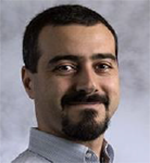
Unal ‘Zak’ Sakoglu, University of Houston
3:00 pm, UNM Centennial Engineering Center, Room 1026
Online Guests: Contact Prof. Santhanam <bsanthan@unm.edu> for a Zoom link
Abstract: Functional magnetic resonance imaging (fMRI) enables studying brain function by indirectly tracking brain’s neural activities with great resolution. Resting-state dynamic functional connectivity (DFC) analysis of fMRI data, a type of dynamic time-series analyses, can provide insights into overall functional connectivity among brain networks and they can be utilized to extract features and neuroimaging biomarkers for classification of different brain conditions, using machine learning techniques. In this talk, we will explore use of various DFC-based features among brain regions to classify different brain conditions, such as cocaine-addiction, schizophrenia, and Gulf War Illness from normal controls (NC), and compare the results with those of static FC methods. If time permits, we will also explore use of space-filling curves to better map high-dimensional fMRI data and extract features from fMRI data to help classification.
Bio: Dr. Unal Sakoglu obtained his Ph.D. in engineering from UNM. His graduate research involved developing signal/image processing, non-uniformity modeling and correction algorithms for better multi-/hyper-spectral sensing. He completed his post-doctoral training at UNM’s Neurology Dept. & BRAIN Imaging Center, and, Mind Research Network, where he developed and applied signal/data analysis and classification techniques to MRI and fMRI data. Subsequently, he worked as Research Scientist at UT-Southwestern-Dallas Medical Center Neuro-radiology Department, Abbott Labs Global Pharmaceutical R&D Translational Neuroimaging Group, UT-Dallas School of Brain and Behavioral Sciences, and East Texas A&M University, worked on analysis of different modalities of medical imaging data such as EEG, PET/CT, SPECT/CT, MRI and fMRI. His recent and current research spans development and application of dynamic multivariate pattern classification, data-mining and machine-learning methods to functional neuroimaging data to advance the understanding of how the human brain is functioning and how it is affected by different brain conditions or diseases. He is also working on developing better signal mapping, simulation and visualization techniques for improved dynamic analysis and classification of multidimensional data, including new sampling methodologies such as space-filling curves and hexagonal sampling.